
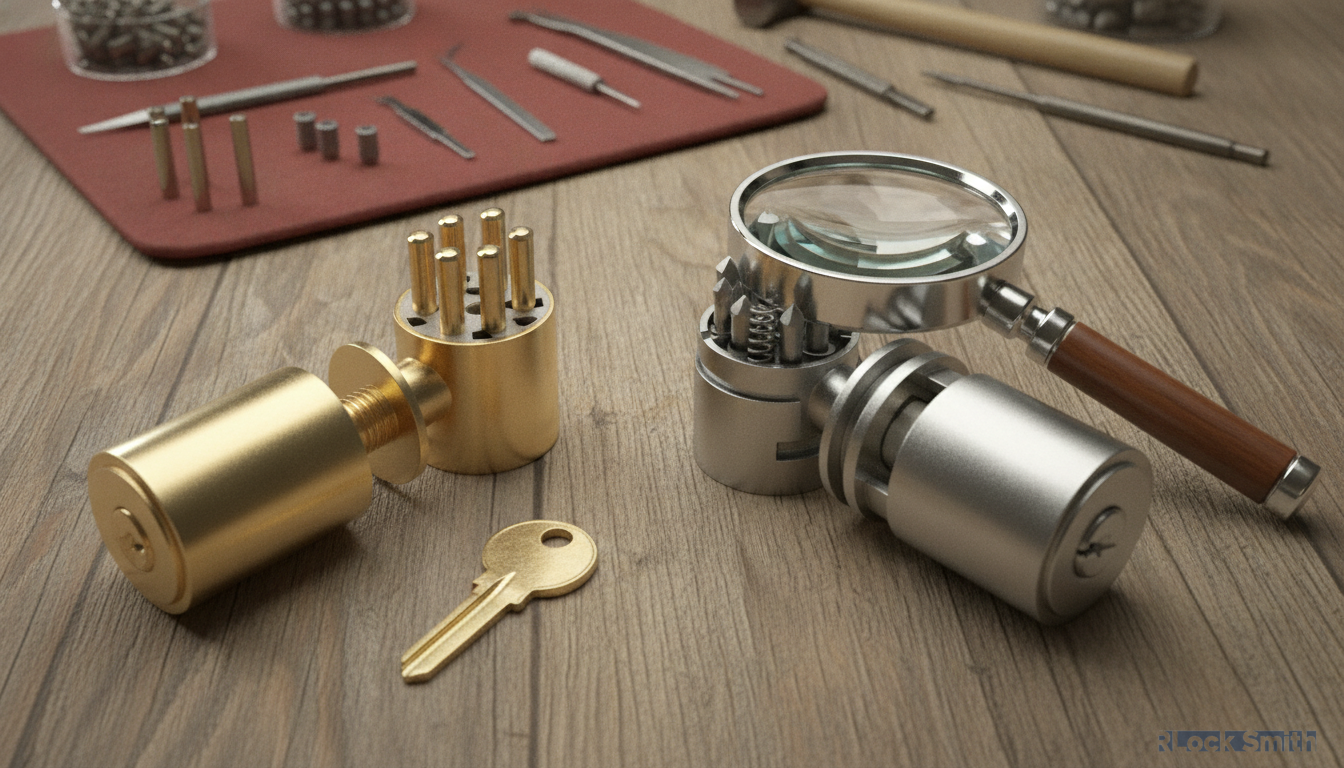
Why Your Deadbolt Might Not Be as Secure as You Think
Walk into almost any Jacksonville hardware store and you'll find deadbolts priced anywhere from $20 to $80. They look solid, they feel heavy, and they come in attractive finishes that match your door hardware. But the price tag on a lock rarely tells you anything meaningful about how well it will resist a determined intruder.
Understanding what separates a standard lock from a high-security lock — and knowing when that difference matters — is one of the most practical things a Jacksonville homeowner or business owner can do for their property. RLock Smith offers both lock replacement and high-security lock installation services, and our technicians can help you make an informed decision based on your specific situation.
How Standard Residential Locks Are Attacked
Most residential deadbolts sold at home improvement stores are ANSI Grade 2 or Grade 3 hardware. They're designed for normal daily use, but they're vulnerable to several well-documented attack methods:
- Lock picking: Using a tension wrench and a pick to manipulate the internal pin stacks one at a time until the cylinder rotates. A skilled person can open a standard pin-tumbler lock in under a minute.
- Bump keying: Inserting a specially cut "bump key" into the keyway and striking it sharply, causing the pin stacks to jump momentarily and allowing the cylinder to rotate. This method works on virtually all standard pin-tumbler locks.
- Drilling: Using a power drill to destroy the cylinder's pin stacks, allowing the lock to be turned with a screwdriver. Most standard lock housings offer minimal resistance to a drill bit.
- Shimming and bypass: Exploiting weaknesses in the latch or bolt design to retract the locking mechanism without turning the cylinder at all.
None of these methods require exotic skills or equipment. This is not intended to alarm you, but to illustrate why the design of a lock matters far more than its appearance.
What Makes a Lock "High-Security"?
Genuine high-security locks are engineered specifically to defeat the attack methods listed above. When RLock Smith installs high-security locks at Jacksonville properties, the hardware typically includes several of the following features:
- Hardened steel inserts: Anti-drill pins or hardened steel rings embedded in the cylinder that cause a drill bit to spin harmlessly rather than destroying the pin stacks.
- Sidebar or disc-detainer mechanisms: Secondary locking mechanisms inside the cylinder that require additional manipulation to defeat, making standard picking techniques ineffective.
- Anti-bump pins: Spool or serrated driver pins that resist the jump created by bump keying, causing the plug to bind rather than rotate.
- Patented keyways: Unique key profiles that cannot be legally duplicated at standard hardware stores — only by authorized dealers. This provides controlled key duplication that standard locks simply can't offer.
- Reinforced housings: Thicker, harder materials in the cylinder body and strike plate that significantly increase resistance to physical attacks.
Brands commonly associated with these features include Medeco, Mul-T-Lock, and Abloy, among others. RLock Smith can discuss specific options based on your door preparation and budget when we visit your property.
ANSI Grades Explained: What the Numbers Actually Mean
The American National Standards Institute (ANSI) rates residential and commercial locks on a three-grade scale based on cycle testing, security, and durability:
- Grade 1: The highest rating, required for commercial applications and strongly recommended for residential front doors. Grade 1 locks must withstand a minimum number of operational cycles and pass specific forced-entry tests.
- Grade 2: Suitable for residential use and light commercial applications. Offers adequate security for most standard homes but does not meet commercial-grade requirements.
- Grade 3: The minimum residential grade. Found most often on interior doors and inexpensive entry hardware — generally not recommended for exterior deadbolts.
Most locks sold in big-box stores are Grade 2. High-security locks are typically Grade 1 and often exceed ANSI standards by a significant margin. For Jacksonville business owners, our commercial lock installation and repair service focuses exclusively on Grade 1 hardware appropriate for the demands of commercial entry doors.
Which Jacksonville Properties Benefit Most from High-Security Locks?
High-security locks aren't the right fit for every situation — they come at a higher cost, and for many properties the investment is better directed elsewhere. Here's a general guide:
Strong candidates for high-security lock installation:
- Estate homes in neighborhoods like Ortega where property values and contents make a stronger deterrent worthwhile
- Small businesses and storefronts in San Marco and Jacksonville's Southside commercial corridors that store inventory or cash on premises
- Properties that have experienced a prior break-in attempt
- Homeowners who want controlled key duplication — no unauthorized copies, period
- Rental property owners in Arlington or Murray Hill who need a reliable audit trail of who holds keys
Properties well-served by quality Grade 1 standard locks:
- Average residential homes in lower-risk areas where a quality Grade 1 deadbolt and proper installation provide strong protection
- Interior commercial doors and utility access points where high-security hardware isn't necessary
- Rental units where frequent rekeying between tenants is more important than ultra-high security specs
If you're unsure which category your property falls into, a brief phone consultation with RLock Smith can help you make an informed decision without any pressure to over-invest.
Installation Quality Matters as Much as Lock Quality
A $400 high-security deadbolt installed in a door with a weak strike plate and a hollow core is only marginally safer than a $40 lock. Proper installation is critical to any lock performing as designed. RLock Smith technicians pay close attention to:
- Strike plate depth and screw length — 3-inch screws anchored into the door frame stud, not just the trim
- Correct alignment of the bolt and latch to eliminate play
- Door frame reinforcement where needed on older Jacksonville homes
- Confirming the door itself is solid-core where security is a priority
This attention to the full entryway — not just the cylinder — is what separates a professional installation from a DIY swap-out.
Combine Services for a Complete Security Upgrade
For Jacksonville homeowners and business owners doing a security overhaul, RLock Smith recommends combining services for the best result. A typical upgrade visit might include:
- High-security lock installation on primary entry doors
- Rekeying of secondary doors and interior locks that don't require high-security hardware
- Assessment of any locks that should be replaced via our lock replacement service
We serve all of Duval County from our base near Philips Hwy, with fast response to neighborhoods across Jacksonville including San Marco, Arlington, Ortega, and Westside Jacksonville.
Talk to RLock Smith About Your Jacksonville Property
Whether you're deciding between a standard Grade 1 deadbolt and a Medeco cylinder, or you just want an honest assessment of your current hardware, RLock Smith is happy to help. We're available Monday through Sunday